
- Licensed and insured crews
- Insurance claim documentation
- 24/7 emergency dispatch
- Serving Calabasas and nearby towns
Active water in the house right now?
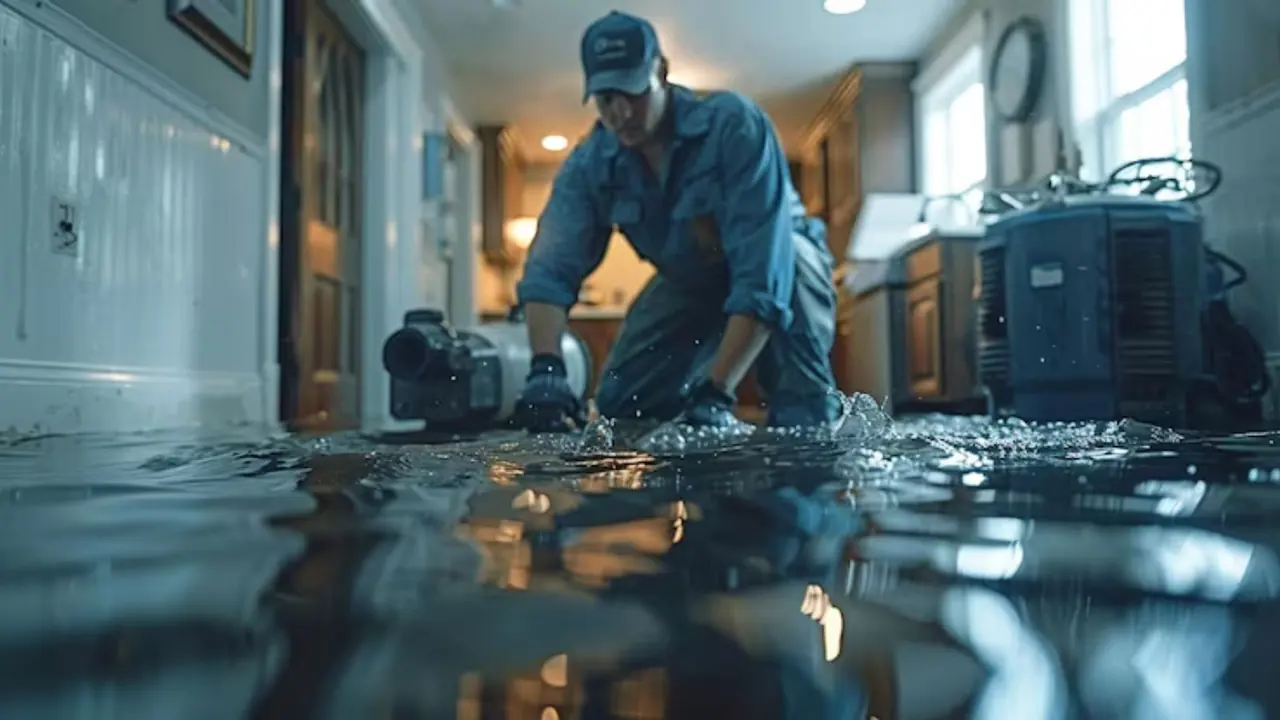
Water that sits on a floor or inside a wall is already working on drywall, subfloor and insulation. Call the 24/7 line, shut off the water if you safely can, and we will line up a crew while you wait.
Our water damage restoration services in Calabasas
Most calls start with a single symptom, like a ceiling stain or a soaked hallway carpet, and end up needing more than one kind of work. The cards below describe what each service covers so you can see where your situation sits. If you are unsure, say so when you phone and the person on the line will sort out where to begin. The full breakdown lives on the water damage services page.
Water Mitigation
The first 24 to 72 hours: stopping the source, extracting standing water, setting dehumidifiers and air movers, and tracking moisture until materials read dry.
See water mitigation →Water Damage Cleanup
Removal of wet carpet pad, soaked drywall and debris, plus sanitizing and deodorizing the affected rooms.
See water damage cleanup →Water Damage Repair
Rebuilding after drying is verified: drywall, insulation, baseboard, flooring and paint put back to match the rest of the house.
See water damage repair →Flood Damage Restoration
Storm runoff, creek overflow or groundwater entering the home, including dirty Category 2 and 3 water and lower levels.
See flood damage restoration →Emergency Water Removal
Pumps and extractors for standing water now, before it soaks into subfloors and wall bases.
See emergency water removal →Mold Remediation
Containment and removal of mold growth once the moisture behind it has been found and dealt with.
See mold remediation →Why homeowners call us first
We are a dispatch network, which means a call to the 24/7 line is routed to a licensed and insured restoration contractor serving Calabasas and nearby towns. We do not claim to be one big company with a fleet outside every neighborhood. What we do offer is a single number that gets a crew moving, and a plain explanation of the work before anyone starts it.
- Scope and price explained before work starts, in words you can follow, so a surprise line item is much less likely.
- Same-day response when available. During storms and heavy leak weeks, crews get busy, and we will tell you honestly if a wait is likely.
- Water damage comes first. Mold remediation is secondary work that follows when moisture has been missed, not a service we push.
- Clear limits. A restoration crew dries, cleans and rebuilds. It does not decide your insurance claim, repair a split pipe or diagnose health symptoms. A plumber and your physician cover those.
Ask any company that shows up whether its crews work to ANSI/IICRC S500, the published standard for professional water damage restoration. A good contractor will answer without hesitation and show you the moisture readings that justify each day of equipment.
How the restoration process works
Every job follows the same logic even when the details differ. Water is removed, wet materials are sorted into dry-in-place or remove, the structure is dried to target readings, and only then does rebuilding begin. Skipping a step is how people end up with a freshly painted wall over wet studs.
Call and triage
The dispatcher asks what failed, how long water has been running, where it is, and whether it looks clean, gray or contaminated. That decides what the crew brings.
Inspect and map the moisture
Technicians use moisture meters and often a thermal camera to find water you cannot see behind baseboards, under cabinets and inside wall cavities.
Extract standing water
Truck-mounted or portable extractors pull water from hard floors and carpet. Removing liquid is much faster than evaporating it, so this comes before any drying equipment.
Remove what cannot be saved
Saturated carpet pad, wet insulation and drywall that has wicked water upward are cut out. Sewage-contaminated porous materials generally go.
Dry with air movers and dehumidifiers
Low-grain refrigerant or desiccant dehumidifiers and directed air movers run for days, with daily readings to confirm the structure is trending toward its dry standard.
Sanitize, then rebuild
Surfaces are cleaned and treated, the crew documents final readings, and repair work replaces what was removed.
Questions about your situation?
Ring the 24/7 number and say what is wet. You will hear what happens first and what the job may involve.
Call (818) 337-2642What changes the cost of water damage restoration
We do not quote numbers over a web page because two leaks that look alike can be very different jobs once the meter comes out. These are the factors that move the total, and the crew will walk through each one with you before work starts. For an actual figure, phone in the details of your own case.
| Factor | What changes |
|---|---|
| Water category | Clean supply-line water allows more drying in place. Gray or sewage water means more removal, protective gear and disposal. |
| Area affected | Square footage of wet floor and the height water wicked up the walls decide how much equipment and labor are needed. |
| Materials involved | Carpet over pad, hardwood, tile on slab and plaster each dry or fail differently. Hardwood and thick pad are the slowest. |
| Time since the loss | Water caught in the first day usually means fewer demolished materials than water left for three days. |
| Drying duration | Equipment is typically on site for several days. Dense materials and humid weather extend the number of days. |
| Rebuild scope | Painting a patch is a small job. Replacing drywall, insulation, cabinets and flooring across several rooms is a large one. |
Water damage and homeowners insurance
What a policy usually does and does not cover
Sudden and accidental damage, such as a burst pipe or an appliance failure, is often covered under a standard homeowners policy. Slow leaks and long-term neglect often are not. Flood, meaning water entering from outside, is usually excluded, and flood cover is a separate policy, commonly through the federal NFIP.
California policies expect you to take reasonable steps to protect the property after a loss, and the Department of Insurance says insurers may reimburse reasonable protection costs when you save receipts. Your policy wording and your insurer settle what applies to you. We document conditions with photos and moisture readings, but the coverage decision is between you and your carrier.
Calabasas houses, weather and where water gets in
The city's 2021 Housing Element background report counts 9,230 housing units in a mostly suburban Calabasas, with roughly 73 percent put up before 1989. Homes from the 1970s and 1980s often still have original supply lines, original water heaters or aging galvanized and copper runs. When one of those fails inside a wall, the damage tends to be hidden for days.
Around Old Town Calabasas and the Leonis Adobe on Calabasas Road, the buildings and homes span several eras, and older construction can mean plaster, older flooring and layered repairs. Water in those assemblies needs a technician who checks behind the surface. The Calabasas Road corridor is also one of the roads the city's Safety Element lists as a critical evacuation route, so during storms traffic delays can affect how fast any crew reaches you.
Rain is not constant, but when it comes it arrives in a block. On the 1991 to 2020 normals, a nearby Woodland Hills station averages 16.41 inches annually. February peaks at 4.62 inches, and the wet stretch runs December to March. That is the season for roof leaks, blocked gutters and water pushing against exterior walls. It is also when a crew call board fills fastest.
Per the city's Safety Element, a FEMA-designated flood zone follows Las Virgenes Creek through the west side, and a small slice of the western city falls inside the 100-year floodplain. The rest of Calabasas sits outside any designated zone, yet the document cautions that heavy downpours can swamp storm drains anyway. West-side residents should ask their insurer about separate flood cover.
Not every wet home comes from rain or a pipe. In January 2024 a broken water line off Thousand Oaks Boulevard near Las Virgenes triggered a landslide that affected at least 20 homes. If the trouble is out in the street, water or sewer, LVMWD staffs (818) 251-2100 day and night. Call them for the utility side and us for the damage inside.
Areas we serve around Calabasas
Calls come from Calabasas and the towns around it. Each page below covers local conditions for that area. Agoura Hills sits just to the west, Westlake Village a little farther along the freeway, and Woodland Hills and West Hills to the east in the San Fernando Valley. Topanga lies south across the canyon roads, and homeowners near Monte Nido often call from that direction as well. The full list is on the service area page.
Mold after water damage
Mold needs moisture to grow. The EPA states that most mold will not grow if wet materials are dried within 24 to 48 hours, which is the main reason fast drying matters. If you already see growth, containment, HEPA air scrubbing and removal under ANSI/IICRC S520 practice are covered on the mold remediation page. Questions about mold and health go to a physician, and no company can promise mold will never return.
Ready when the water is not waiting
Emergencies do not wait for office hours, and neither does the 24/7 line. If the damage is small and dry, you can use the contact page to describe it. If it is active, call. You can also read more about how the network works before you decide.
Frequently asked questions
How fast do I need to call after finding water damage in my Calabasas home?
As soon as you find it. Drywall, carpet pad and insulation start absorbing water immediately. EPA guidance is to dry affected areas inside 24 to 48 hours, because after that mold becomes a real risk. Past that window, more materials shift from dry-in-place to remove.
If you cannot reach a plumber yet, shut the main valve and call the 24/7 line anyway. Extraction and drying can start while the pipe repair is arranged.
Do you work nights and weekends?
Yes. The emergency line is answered 24/7, including holidays and storm nights, and a crew is dispatched based on availability. We say same-day response when available, because we will not promise an arrival time we cannot control.
Will my homeowners insurance pay for the work?
That depends on your policy and the cause of the loss. Sudden and accidental damage is often covered, gradual leaks often are not, and flood usually needs separate flood coverage. Your policy and your insurer settle it, since we have no say in claims.
What we can do is document the loss with photos, readings and itemized scope notes so your claim has clear records.
Can I stay in the house while it dries?
Often yes, if the water was clean and the electrical system is safe. Expect loud air movers and dehumidifiers running around the clock for several days. If the water was sewage or floodwater, or if there is mold growth, your crew may ask you to stay out of the affected rooms or the whole home for a time.
What is the difference between water mitigation and water damage repair?
Mitigation is stopping the damage: extraction, removal of ruined materials and drying. Repair is rebuilding afterward, such as new drywall, paint and flooring. Mitigation comes first, and repair should not start until moisture readings show the structure is dry.
Our pages on water mitigation and water damage repair cover each in detail.
Do you give exact prices on the phone?
Before any work begins we go over scope and price, but the actual figure depends on the water category, the area affected and how long it has been wet. Call the 24/7 line and describe the situation. The dispatcher can tell you what will drive the cost.
Is a flooded garage or lower level handled the same way as a burst pipe?
Not quite. Outside water from storms or a creek is usually Category 2 or 3, which means more protective equipment and more removal of porous materials. Details are on the flood damage restoration page. Mention any basement or lower level when you call.
Who fixes the broken pipe?
A licensed plumber. Restoration crews dry and rebuild but do not repair the failed pipe or fixture. Many homeowners arrange both at once so water extraction can start while the plumber works.